
This article is written with the utmost respect for the lives lost and affected by the Air India crash on June 12, 2025. The intent is to draw broader organizational lessons around governance, risk, and compliance, in hopes of building stronger systems for the future.
💭 Confronting the Uncomfortable Truths
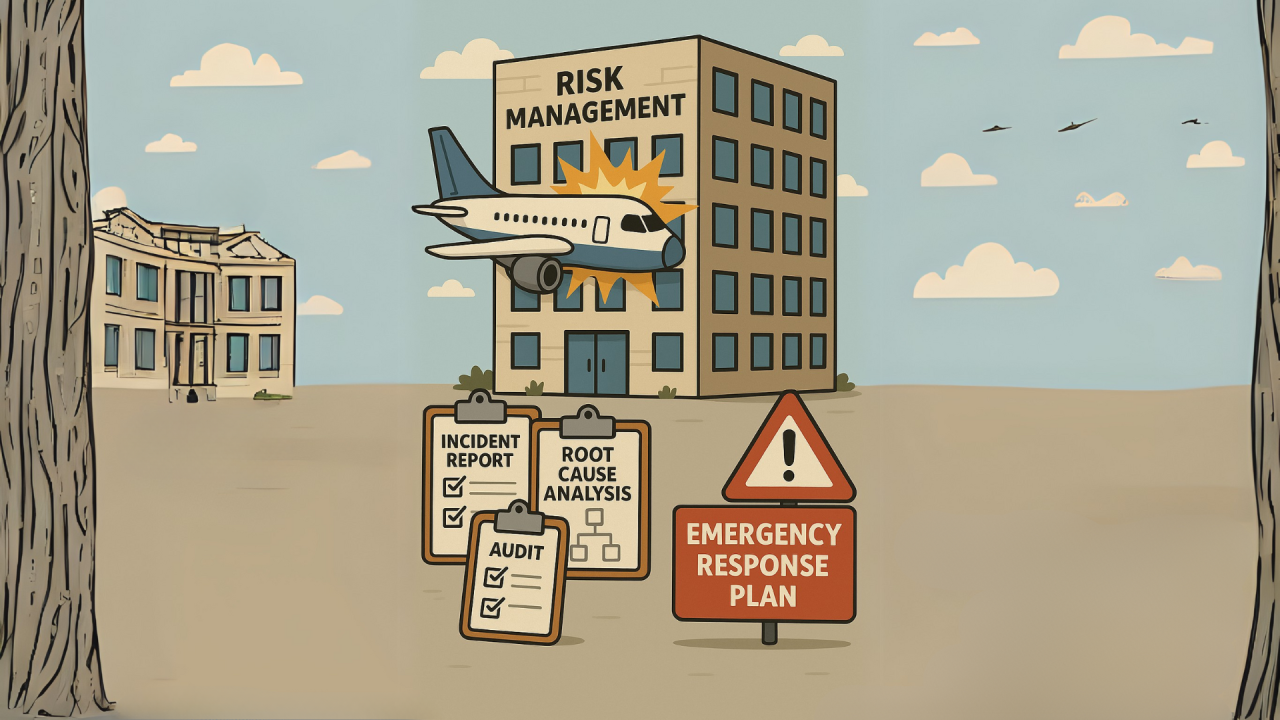
No organization operates without risk. But when risk materializes into tragedy—as with the recent Air India Flight AI171 crash—it forces us to confront uncomfortable truths about how Governance, Risk, and Compliance (GRC) frameworks must evolve.
The aviation industry is one of the most heavily regulated sectors in the world, yet this incident underlines a crucial point for all industries:
Compliance alone is not resilience; governance alone is not safety; and risk management must be a living, breathing practice.
🕊️ The AI171 Incident
On June 12, 2025, Air India Flight AI171, a Boeing 787-8 Dreamliner (VT-ANB), tragically crashed near B.J. Medical College in Ahmedabad, just seconds after take-off on its scheduled flight to London Gatwick.
The accident resulted in the loss of lives both on board and on the ground—with one passenger surviving.
According to early reports, a “Mayday… no power” call was issued before the aircraft failed to achieve stable climb. The plane reportedly had its landing gear down, flaps unconfigured, and suffered suspected dual-engine thrust loss.
As investigations continue, authorities are examining a complex web of technical, operational, human, vendor-related, and organizational factors—highlighting the critical role that integrated GRC frameworks can play in:
- Managing cascading risks
- Surfacing early warning signals
- Ensuring accountability across vendor networks
- Fostering a resilient, safety-first culture in high-stakes operational environments
⚙️ Beyond Compliance: GRC as the Backbone of Safety
This tragedy prompts a broader reflection on how GRC practices can strengthen operational safety across complex industries like aviation.
Regulations provide the foundation, but continuous, dynamic management of governance, risk, compliance, and resilience is equally essential.
🛠️ Operational Risk: Continuous Monitoring and Escalation
In cases of engine performance issues—mechanical, fuel-related, or control-based—advanced operational risk management systems can provide early visibility through continuous monitoring of data trends and system health.
When integrated into governance processes, such insights enable timely escalation and informed decision-making, potentially averting critical failures.
📋 Procedural Clarity and Real-Time Compliance
The reported flight configuration—landing gear position, flap settings, and power anomalies—underscores the need for procedural clarity and real-time verification.
Robust GRC frameworks ensure that:
- Standard procedures are clearly defined, regularly updated, and deeply internalized.
- Execution of these procedures is continuously monitored in live operational contexts.
🤝 Vendor Risk Management: Monitor and Manage
In aviation, vendor relationships are integral to safety. Aircraft readiness relies on an extended network of suppliers, maintainers, and service providers.
A structured third-party risk management approach allows organizations to:
- Monitor supplier performance
- Identify delays or deviations early
- Mitigate risks introduced through the extended vendor ecosystem
🧑✈️ Fatigue and Crew Readiness
Human factors—including fatigue, workload, and stress—play a critical role in operational safety. Even experienced crews operate under immense cognitive demands.
GRC-driven programs can help organizations implement:
- Transparent and fair crew scheduling systems
- Proactive fatigue management protocols
- Continuous training aligned with emerging operational risks
🧾 Audit: The Eyes and Ears of Risk Culture
Over recent years, multiple whistleblower reports, investigative articles, and regulatory findings have raised concerns regarding safety culture—citing design flaws, production issues, and pressures to meet delivery timelines.
These signals highlight the need for truly independent Internal Audit and Risk functions.
When empowered and free from commercial influence, such functions can:
- Surface safety concerns early to leadership and the board
- Drive accountability and corrective action before risks manifest
Without this oversight, emerging risks remain hidden—until they tragically surface.
🔄 Building Resilience Through GRC
The role of GRC is not to predict every possible scenario—it is to create an organizational environment where risks are surfaced, discussed, and addressed continuously.
True resilience arises when leadership, staff, and partners share accountability for safety and risk awareness.
As investigations into AI171 continue, this tragedy reminds all industries—not just aviation—of the urgent need for integrated, adaptive GRC systems.
In sectors where complex systems intersect with human lives, GRC frameworks help organizations stay informed, responsive, and resilient to evolving risks.
🌍 Honouring Through Continuous Improvement
Ultimately, the goal is not mere compliance, but a living culture of safety, accountability, and continuous improvement—one that honours the memory of those lost by ensuring lessons lead to action.
#GRC #OperationalRisk #VendorRiskManagement #EnterpriseRiskManagement #ThirdPartyRisk #Compliance #AviationSafety #Resilience #Governance #InternalAudit #RiskCulture #BusinessContinuity #AviationIndustry #RiskManagement #ContinuousImprovement #ProGReC
1 thought on “When Risks Become Reality: GRC Reflections on the AI171 Tragedy”
this is a good insightful blog